Many thefts and incidents start with someone who walked in unnoticed. Good access control for businesses is the most cost-effective security measure because it stops problems before they happen.
Define who enters, where and when
The first step is not buying turnstiles; it is setting rules: which doors are used, at what hours, who can authorize visits and which areas are restricted. Without those rules, neither the best guard nor the best technology works.
Protocols by type of person
Employees
Visible badge, entry through the assigned door and a log of entries and exits. Terminations must be reported to security immediately so access can be revoked.
Visitors
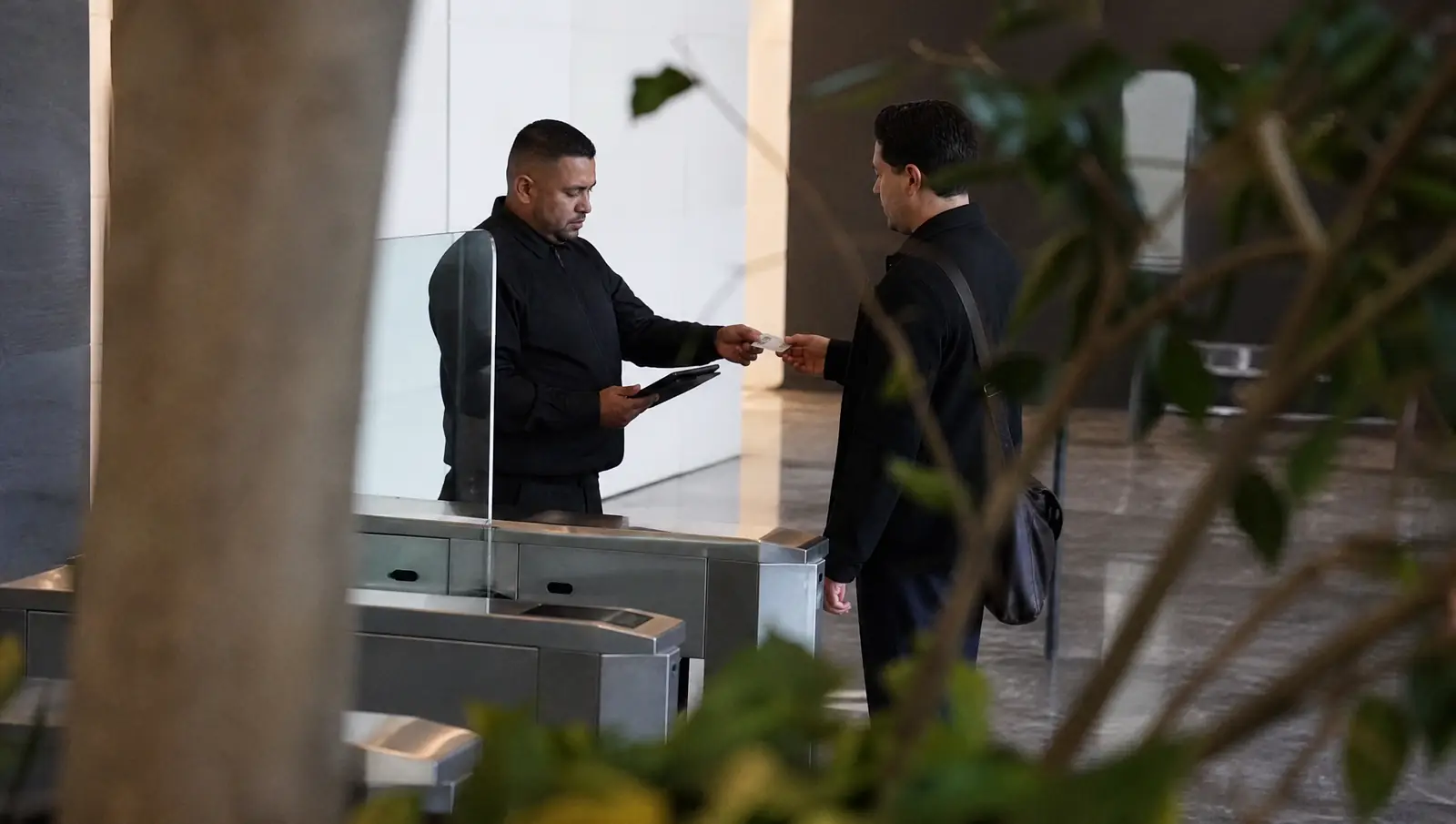
Official ID, a log with entry time, the host’s name and a temporary badge. The host receives and escorts the visitor; the badge is returned on exit.
Suppliers and contractors
Advance scheduling, a list of authorized staff, tool checks on entry and exit, and escorts in sensitive areas.
Carriers and vehicles
Log plates, driver and unit, inspect cab and trailer, and control seals. For cargo operations, see our guide on how to protect cargo in yards and docks.
Exit checks
Controlling who leaves and with what matters as much as controlling who enters. Material exit passes and random, respectful checks reduce internal theft.
Supporting technology
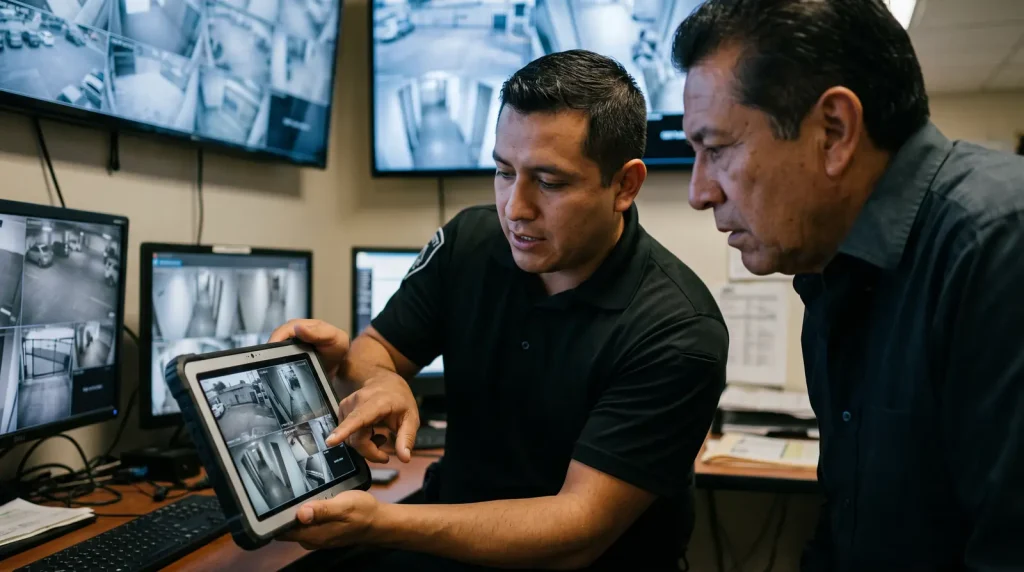
Proximity cards, biometrics, plate readers and gate cameras speed up logging and leave evidence. They work best when a guard supervises and handles exceptions. See our monitoring and electronic security service.
Common mistakes
- Emergency doors used as everyday entrances.
- Badges nobody collects at the end of the day.
- “Just this once” exceptions that become habits.
- Illegible or incomplete paper logs.
Grupo ARZA designs and runs access protocols for offices, plants and warehouses as part of our industrial and commercial security. Ask for a review of your access points.
Frequently asked questions
Is it legal to ask visitors for ID?
Yes, a company can request ID to log access to its premises. The data must be handled according to its privacy notice.
Which is better, turnstiles or guards?
They complement each other: technology logs and speeds things up, while the guard verifies, handles exceptions and responds to incidents.
How often should protocols be reviewed?
At least once a year, and whenever operations change, an incident occurs or an audit is coming up.